Seed Oils in Skincare: 5 Reasons RAWDOG Goes Seed-Oil-Free
Learn how seed oils differ, why oxidative stability and the full formula matter, and why RAWDOG chooses a seed-oil-free, biomimetic approach.

Seed oils in skincare are not automatically good or bad. Seed-oil-free skincare is a formulation choice, not a claim that every seed oil is unsafe. Some plant oils can support hydration and barrier function. Their effects depend on the oil, fatty-acid profile, processing, packaging, concentration, and the complete formula.
Skincare without seed oils can be a useful preference, but that label alone does not make a formula better. RAWDOG uses a biomimetic skincare approach because it lets us build around stable lipids and give every ingredient a clear job. Here are the five reasons that standard matters to us.
What Seed Oils in Skincare Are
Seed oils are lipids obtained from plant seeds through pressing, extraction, or a combination of methods. Cosmetic-grade oils may be refined or unrefined, and they do not all behave the same way on skin.
Common names on skincare labels include:
- Sunflower Seed Oil (Helianthus Annuus Seed Oil)
- Grapeseed Oil (Vitis Vinifera Seed Oil)
- Safflower Seed Oil (Carthamus Tinctorius Seed Oil)
- Soybean Oil (Glycine Soja Oil)
- Canola or Rapeseed Oil (Brassica Napus Seed Oil)
- Rosehip Seed Oil (Rosa Canina Seed Oil)
Jojoba is often grouped with seed oils because it comes from a seed, but chemically it is primarily a liquid wax ester. That distinction is exactly why the ingredient name alone never tells the whole story.
1. Oxidative Stability Matters
Many seed oils contain substantial amounts of polyunsaturated fatty acids, or PUFAs. Their multiple double bonds make them more susceptible to oxidation than more saturated lipids. Light, oxygen, heat, trace metals, antioxidants, packaging, and storage conditions can all change the rate of oxidation.
That does not mean a finished product containing seed oil automatically oxidizes on your face. A well-designed formula can use antioxidants, protective packaging, and other controls to improve stability. It does mean formulators need to account for the fatty-acid profile and the complete stability system, not rely on a “natural oil” label.
RAWDOG takes a simpler route. Our lipid system prioritizes ingredients such as squalane, caprylic/capric triglyceride, tallow lipids, and Ceramide NP. The goal is a stable formula with a lightweight finish and consistent performance.
For more on the moisturizer side of that system, read our guide to beef tallow for skin.
2. Different Plant Oils Can Produce Different Results
“Plant oil” is not a single functional category. Research on topical oils has produced different outcomes depending on the specific oil and study population.
In a small controlled study of 19 adults, sunflower seed oil preserved stratum-corneum integrity and improved hydration, while olive oil reduced barrier integrity. A separate study in preterm infants found that sunflower seed oil could delay aspects of early barrier maturation. These studies looked at different populations and cannot be treated as interchangeable, but together they make one point clear: broad claims about every seed oil being good or bad are not scientifically useful.
RAWDOG's seed-oil-free standard is therefore not a safety warning. It is a clear formulation philosophy. We choose the lipid system we want to work with instead of building the formula around a broad plant-oil category.
3. We Formulate Around the Skin Barrier
The skin barrier and skin surface contain several kinds of lipids. Ceramides, cholesterol, and fatty acids are central to the stratum corneum, while human sebum contains squalene, wax esters, and triglycerides.
That does not make every “skin-like” ingredient automatically effective. Concentration, delivery, supporting ingredients, texture, and the finished formula all matter. It does give formulators a useful model.
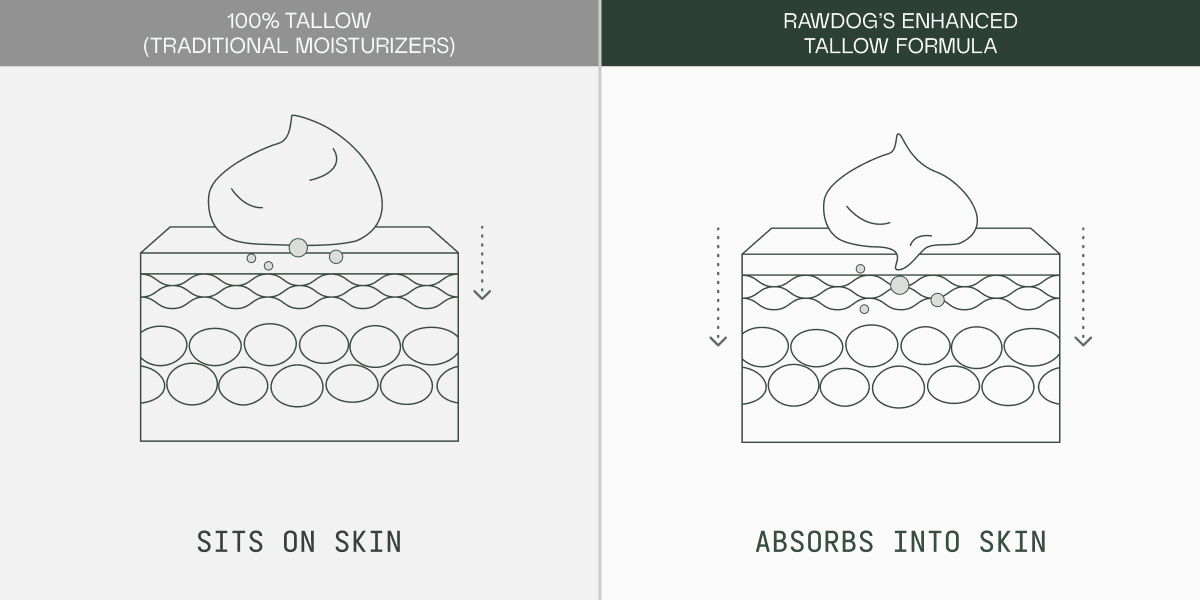
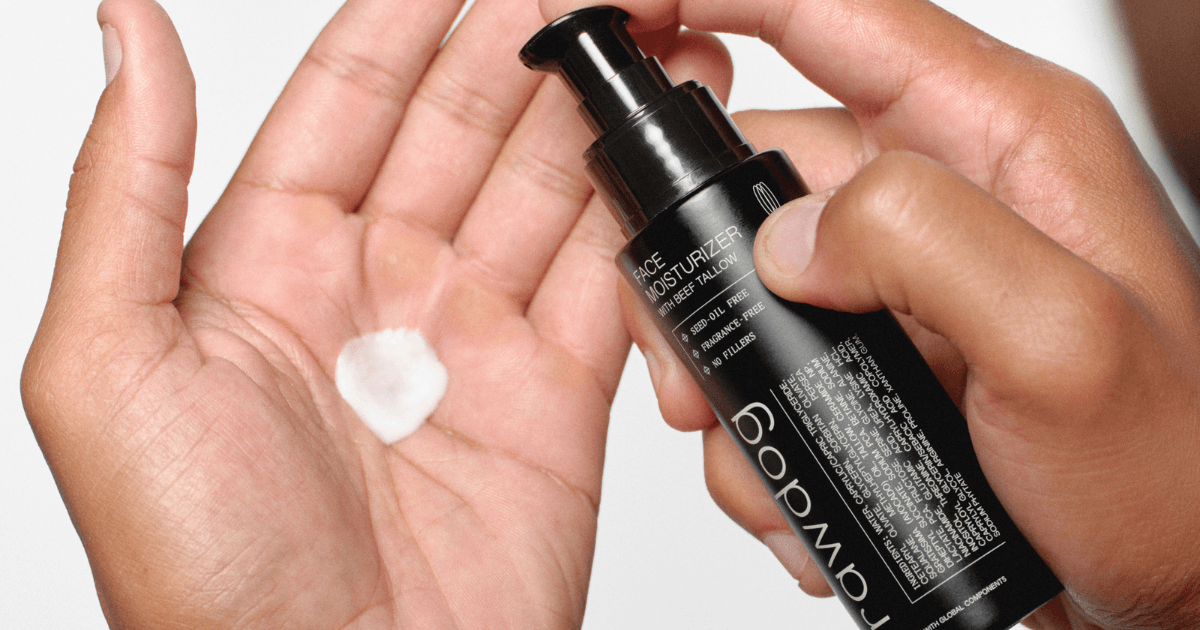
RAWDOG's face moisturizer combines tallow lipids and squalane with Ceramide NP, glycerin, and natural moisturizing factors. The intention is to support hydration and barrier function without leaving the heavy finish many men avoid.
Our men's face moisturizer guide explains how humectants, emollients, and barrier lipids do different jobs.
4. A Clear Standard Makes the Formula Easier to Evaluate
Seed oils are not automatically “fillers,” and price alone does not determine whether an ingredient performs. The better question is whether each ingredient supports the finished product's purpose.
In RAWDOG's product-development process, every ingredient has to earn its place through performance, texture, stability, or delivery. That is the same standard we apply to the lipid system.
For RAWDOG, that means asking:
- Does the cleanser remove buildup without leaving skin stripped?
- Does the moisturizer hold water and support the barrier without feeling greasy?
- Does the eye cream put its actives in a comfortable, repeatable daily formula?
- Does every ingredient earn its place?
A seed-oil-free standard makes our answer easy to understand. We are not using plant oils as a default base and then building the story around them. We start with the function the product needs and select the lipid, humectant, emulsifier, and active system from there.
That is also why the formula should be judged as a whole. One fashionable ingredient cannot rescue a weak product, and one seed oil does not automatically make a product ineffective.
5. The Alternative System Is Specific
“Free from” only means something when the replacement system is better defined. RAWDOG uses different supporting ingredients according to the product:
- The Beef Tallow Face Moisturizer uses tallow lipids, squalane, Ceramide NP, glycerin, and natural moisturizing factors for hydration and barrier support.
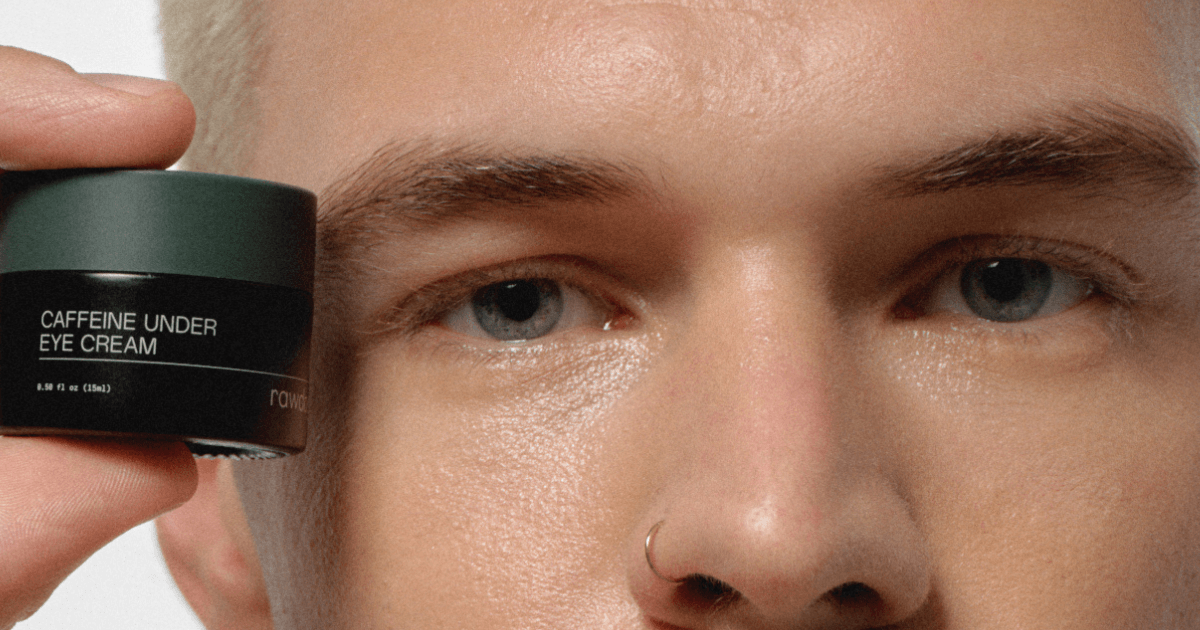
- The Caffeine Under Eye Cream combines squalane and humectants with caffeine, zerumbone, and three cosmetic peptides.
- The pH 5.5 Facial Cleanser is built to remove buildup without leaving skin feeling tight or stripped. See how we approach face wash for oily skin.
Seed-oil-free is one part of that system. Performance, texture, stability, and consistent use matter more than a single label claim.
Seed-Oil-Free Skincare FAQs
Are seed oils bad for skin?
Not as a category. Different oils have different fatty-acid profiles, and their effects depend on formulation and use. RAWDOG avoids seed oils as a brand formulation standard, not because every seed oil has been shown to harm skin.
Can sunflower seed oil support the skin barrier?
Some studies suggest it can support hydration and barrier integrity in adults, while research in preterm infants has produced a different result. Population, skin condition, oil composition, and application protocol all matter.
Does seed-oil-free mean non-comedogenic?
No. “Seed-oil-free” does not guarantee that a product will never clog pores or suit every person. Breakouts can depend on the complete formula, skin type, application habits, and individual response.
How can I identify seed oils in skincare?
Check the INCI list for ingredient names ending in “seed oil,” including Helianthus Annuus Seed Oil, Vitis Vinifera Seed Oil, Carthamus Tinctorius Seed Oil, and Glycine Soja Oil. Then evaluate the complete formula rather than judging one ingredient in isolation.
References
- Danby SG, et al. Effect of olive and sunflower seed oil on the adult skin barrier: implications for neonatal skin care. Pediatric Dermatology. 2013.
- Kanti V, et al. Influence of sunflower seed oil on the skin barrier function of preterm infants: a randomized controlled trial. Dermatology. 2014.
- Wertz PW. Lipids and the Permeability and Antimicrobial Barriers of the Skin. Journal of Lipids. 2018.
- Omega-3 Polyunsaturated Fatty Acids: Emerging Sources, Oxidative Stability, Bioavailability, and Health Benefits. Nutrients. 2021.
- Cosmetic Ingredient Review. Safety Assessment of Helianthus annuus (Sunflower)-Derived Ingredients as Used in Cosmetics.